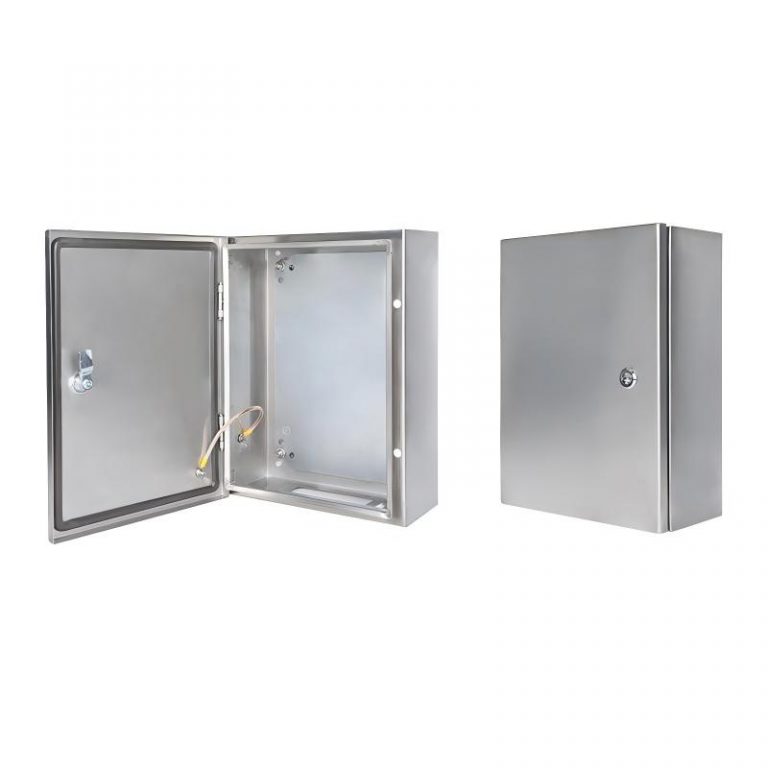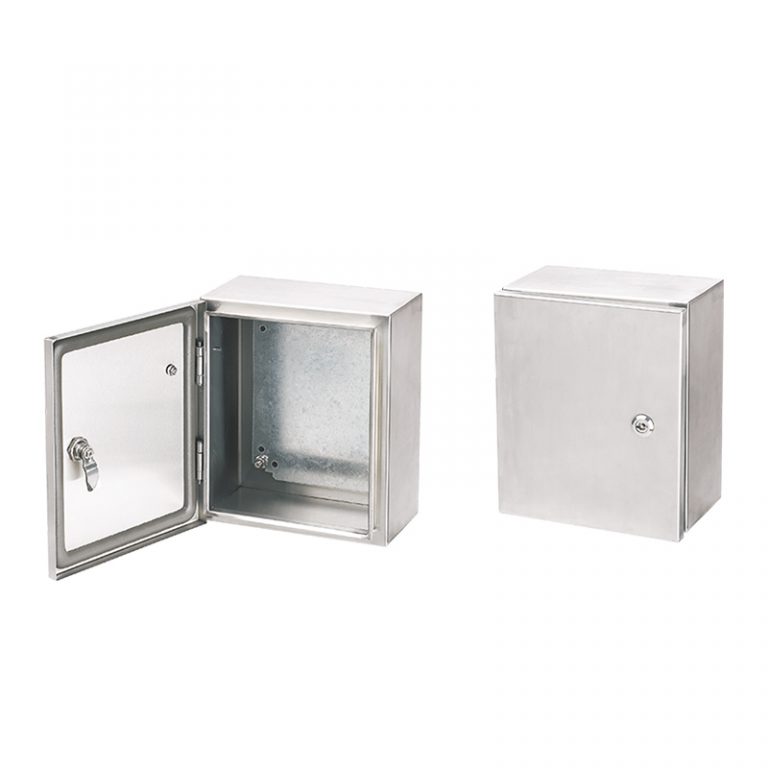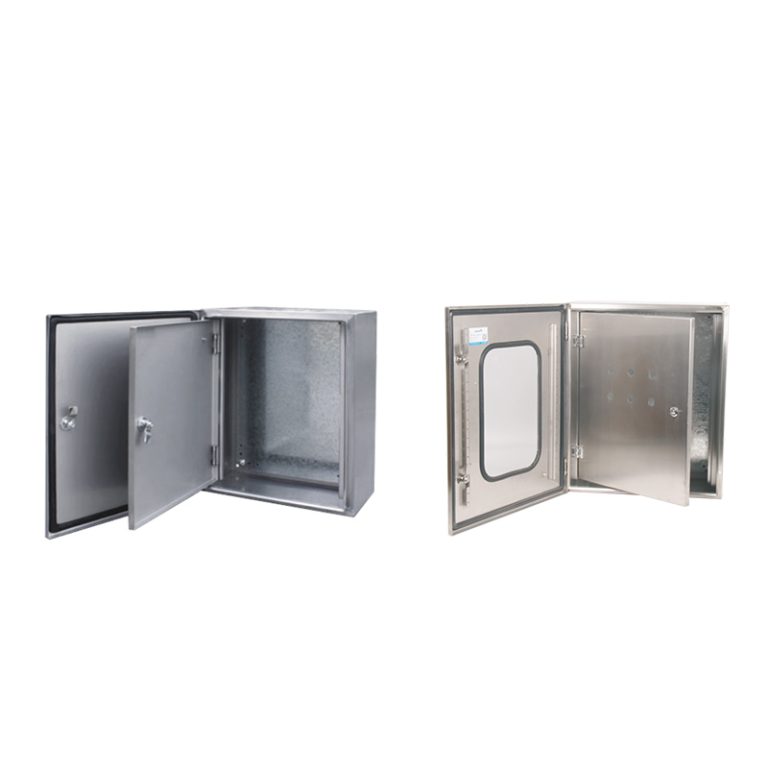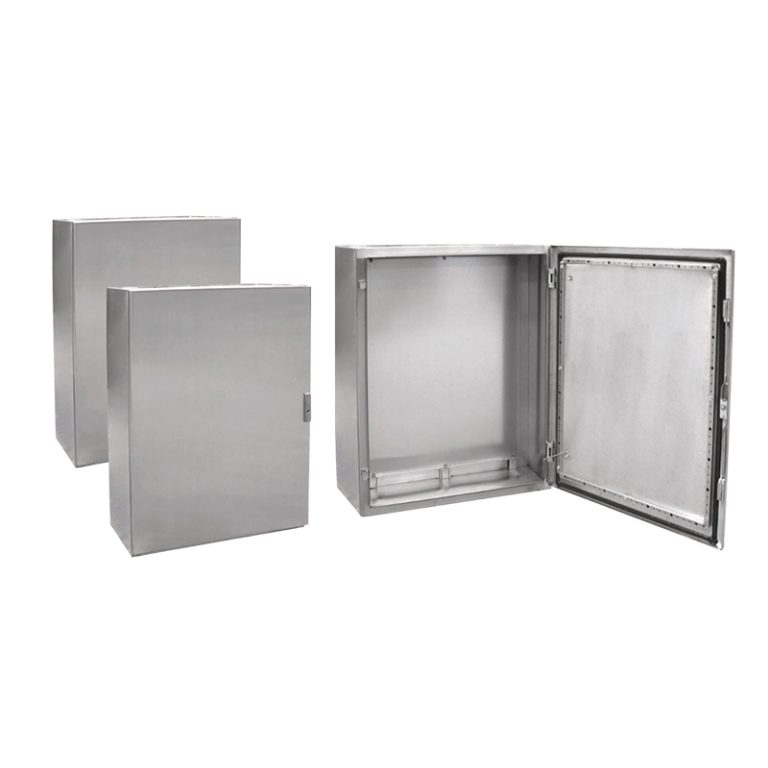




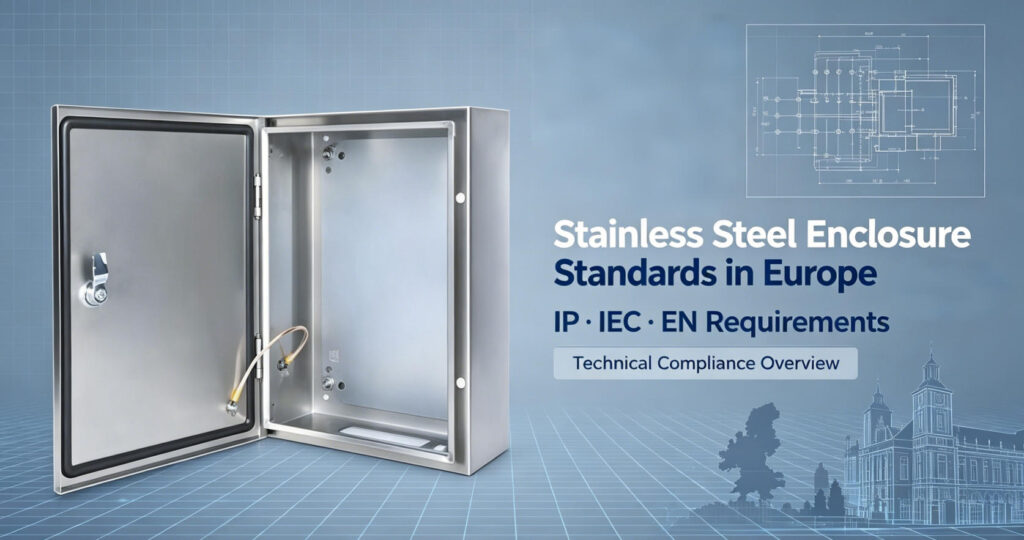
In Europe, an empty stainless steel enclosure is mainly assessed under EN IEC 62208. IEC 60529 defines its IP protection against dust and water, while IEC 62262 covers IK impact resistance. IEC 61439 applies only after the enclosure becomes part of a complete low-voltage switchgear or controlgear assembly. Meeting an IP or EN standard alone does not automatically establish CE compliance.
The correct specification therefore depends on whether the product is an empty enclosure or a completed electrical assembly, as well as its installation environment, protection rating, material grade and required documentation. Saipwell supplies stainless steel electrical enclosures for industrial, outdoor and customised electrical projects.
Key Takeaways
- EN IEC 62208 covers general requirements and tests for empty enclosures.
- IEC 60529 defines IP protection against access, solid objects and water ingress.
- IEC 62262 defines IK resistance against external mechanical impacts.
- IEC 61439 applies to complete low-voltage switchgear and controlgear assemblies.
- IP and EN compliance do not automatically mean that a product is CE compliant.
What Standards Apply to Stainless Steel Enclosures in Europe?
Several standards may apply because enclosure construction, ingress protection, impact resistance and completed electrical assemblies are evaluated separately.
| Standard | Covers | Applies To |
| EN IEC 62208 | Empty enclosure requirements | Empty stainless steel enclosure |
| IEC 60529 | IP protection rating | Enclosure protection level |
| IEC 62262 | IK impact resistance | Mechanical protection |
| IEC 61439 | Low-voltage assemblies | Complete electrical assemblies |
EN IEC 62208 applies before electrical equipment is installed. Once switchgear, controlgear, busbars and wiring are added, the relevant part of the IEC 61439 series may apply to the completed assembly.
What Is the Difference Between IEC and EN Standards?
IEC standards are international electrotechnical standards. An EN standard is a European standard adopted by national standards bodies in CEN and CENELEC member countries.
When an IEC standard is adopted in Europe, it may appear as an EN IEC standard. National versions can include prefixes such as DIN EN IEC in Germany or BS EN IEC in the United Kingdom. Project documents should therefore identify the required standard, edition and national adoption clearly.
EN IEC 62208 Requirements for Empty Stainless Steel Enclosures
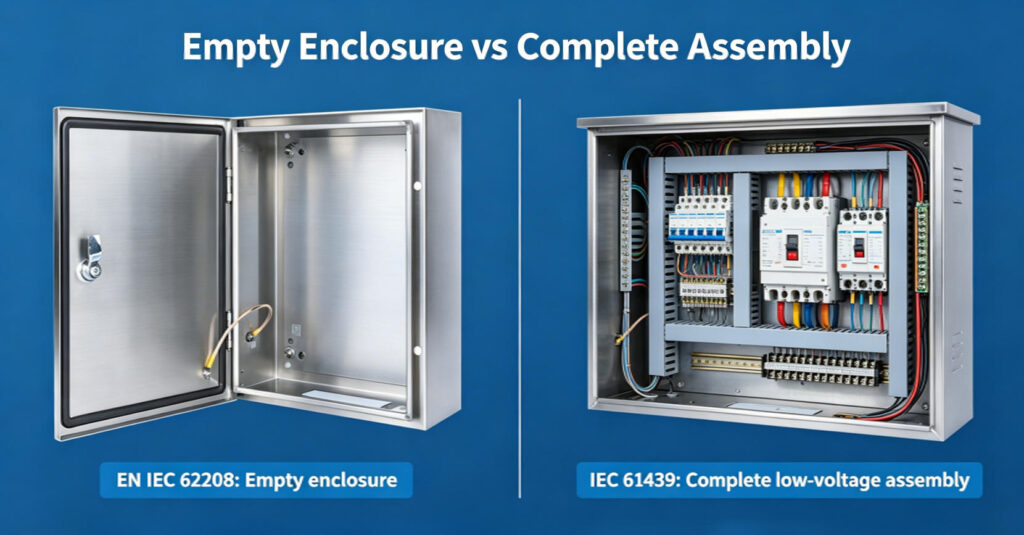
EN IEC 62208 applies to empty enclosures supplied before switchgear and controlgear components are installed. The current IEC 62208:2023 edition covers enclosures intended for low-voltage assemblies up to 1,000 V AC or 1,500 V DC and for general indoor or outdoor use.
Scope: The standard evaluates the enclosure in the condition supplied by its manufacturer. It does not verify the final electrical assembly.
Enclosure design requirements: The enclosure should provide suitable mounting, access, sealing, door operation, protective bonding and cable-entry arrangements for the intended application.
Mechanical properties: The enclosure must provide adequate structural strength for its declared loads and normal installation conditions. Doors, hinges, locks, mounting plates and conductive connections should remain functional.
Testing requirements: Verification may cover declared characteristics such as mechanical strength, ingress protection, impact resistance, protective circuit continuity, corrosion behaviour and marking.
Any later modification—including holes, ventilation openings, cable glands or replacement seals—may affect the original IP, IK or structural performance.
IEC 60529 and IP Ratings for Stainless Steel Enclosures
IEC 60529 classifies the protection provided by an enclosure against access to hazardous parts and the ingress of solid objects and water. It does not assess corrosion, chemicals, salt spray or every outdoor environmental condition.
How IP Ratings Protect Electrical Enclosures
An IP code normally contains two digits:
- The first digit indicates protection against access and solid-object ingress.
- The second digit indicates protection against water ingress.
For example, IP66 means the enclosure is dust-tight and protected against powerful water jets under specified test conditions.
The rating applies to the tested configuration. Cable glands, windows, vents, push-buttons and custom cutouts must be selected and installed correctly to maintain the required protection.
IP65 vs IP66 vs IP67: Which Rating Do You Need?
| IP Rating | Dust Protection | Water Protection | Typical Use |
| IP65 | Dust-tight | Water jets | General industrial or sheltered outdoor use |
| IP66 | Dust-tight | Powerful water jets | Exposed outdoor or washdown environments |
| IP67 | Dust-tight | Temporary immersion | Locations with temporary submersion risk |
IP65 is suitable where normal water jets are expected. IP66 provides stronger water-jet protection, while IP67 addresses temporary immersion under defined conditions.
IP67 does not automatically mean permanent underwater suitability, and a higher IP number is not always necessary. Selection should follow the actual water exposure and installation conditions.
For exposed outdoor and industrial projects, Saipwell offers an IP66 stainless steel wall-mounted enclosure with SUS304 construction, an IK10 configuration and custom processing options. The applicable rating should still be confirmed for the selected model and final assembly.
IEC 62262 and IK Impact Protection Ratings
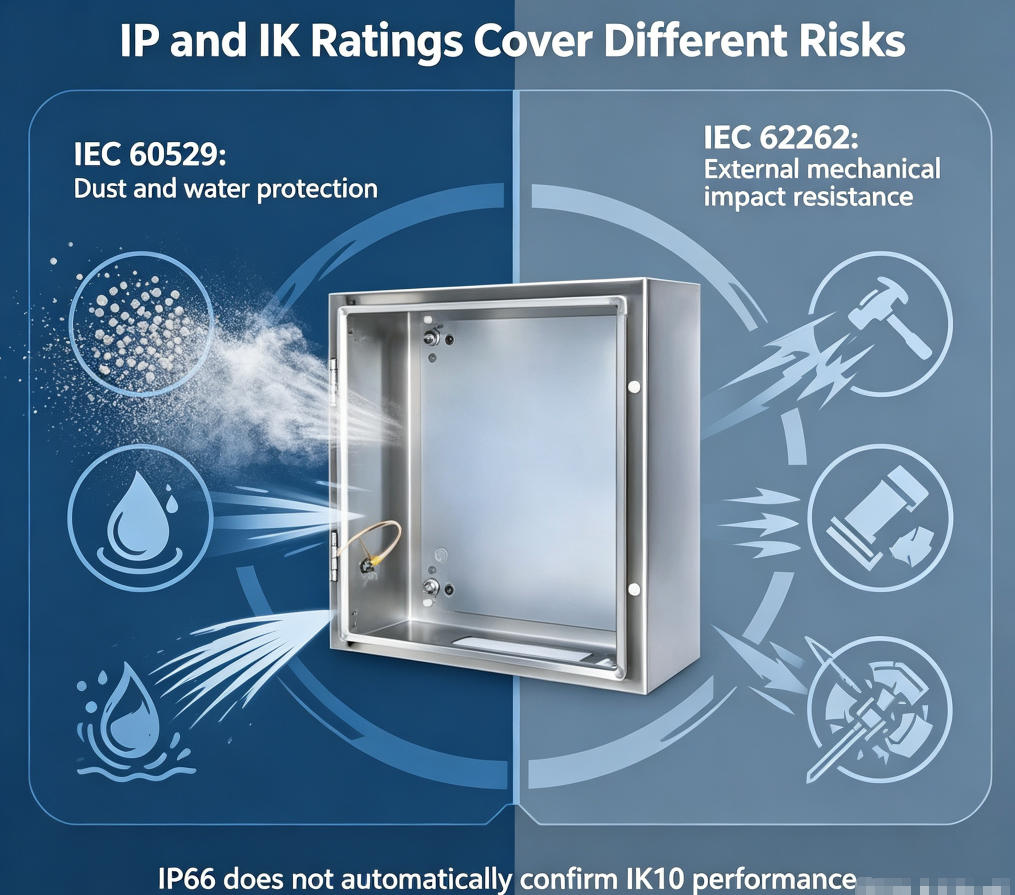
IEC 62262 defines the IK code used to classify enclosure resistance to external mechanical impacts. IP and IK ratings address different risks: IP covers access, dust and water, while IK covers impact energy.
IK protection is particularly relevant for enclosures installed in factories, transport facilities, utilities, outdoor infrastructure and publicly accessible areas.
A suitable IK rating helps reduce the risk of impact damage to doors, locks, hinges and seals. However, impact performance depends on the complete enclosure design, not only the thickness of the stainless steel sheet.
When Does IEC 61439 Apply to Stainless Steel Enclosures?
IEC 61439 applies when the enclosure forms part of a complete low-voltage switchgear or controlgear assembly.
An empty enclosure with a door, mounting plate, gasket and earthing parts is normally evaluated under EN IEC 62208. After circuit breakers, busbars, control devices, wiring and terminals are installed, the assembly manufacturer must evaluate the finished system under the relevant IEC 61439 requirements.
IEC 61439-1 provides general rules for assembly construction, service conditions, technical characteristics and verification. It must be used with the relevant product-specific part of the series.
Using an enclosure assessed under EN IEC 62208 can support assembly design, but it does not automatically make the completed control panel or switchboard compliant with IEC 61439.
Does Meeting IP and EN Standards Mean CE Compliance?
No. An IP rating or compliance with an EN standard does not automatically mean that a stainless steel enclosure is CE compliant.
An IP rating verifies only defined ingress-protection performance. An EN standard provides technical requirements or test methods. CE marking is the manufacturer’s declaration that the complete product complies with all applicable EU legal requirements.
CE marking is required only where specific harmonised EU legislation applies. Before affixing it, the responsible manufacturer must identify the applicable legislation, complete the required conformity assessment and prepare supporting technical documentation.
Relevant documentation may include:
- Product description and drawings
- Material and component information
- Risk assessment
- Applicable standards
- Test reports
- Installation instructions
- EU Declaration of Conformity
A test report for one enclosure characteristic should not be presented as proof that the complete product meets every CE requirement.
How to Specify a Stainless Steel Enclosure for European Projects
Select IP and IK Requirements
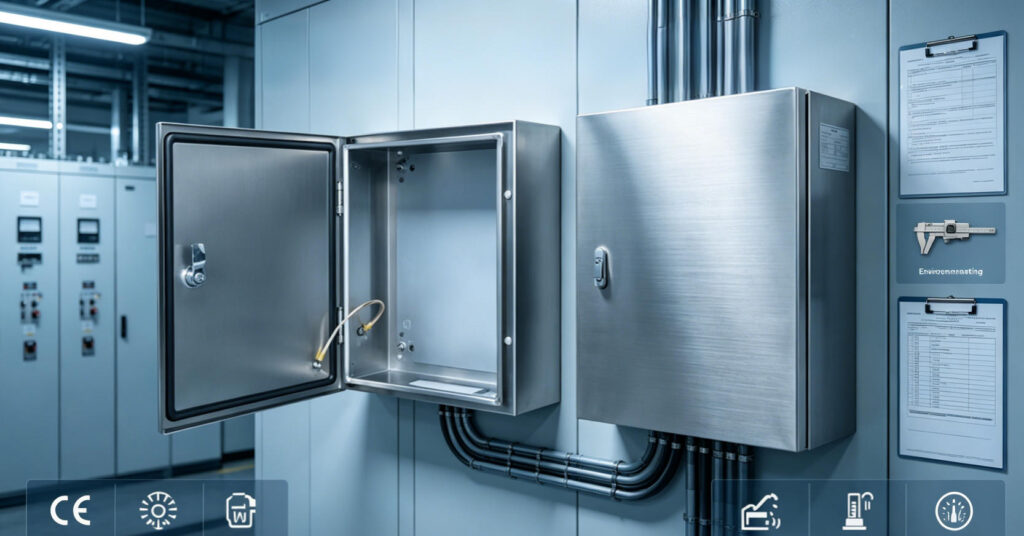
Start with the actual installation conditions:
- Indoor or outdoor location
- Dust and water exposure
- Cleaning or washdown procedures
- Mechanical impact risk
- Cable-entry direction
- Condensation and temperature changes
Specify IP and IK separately. An IP66 rating does not confirm mechanical strength or corrosion resistance, and an IK rating does not confirm protection against water.
The final configuration—including glands, vents, windows and cutouts—must maintain the specified protection level.
Choose Stainless Steel Grade: 304 vs 316
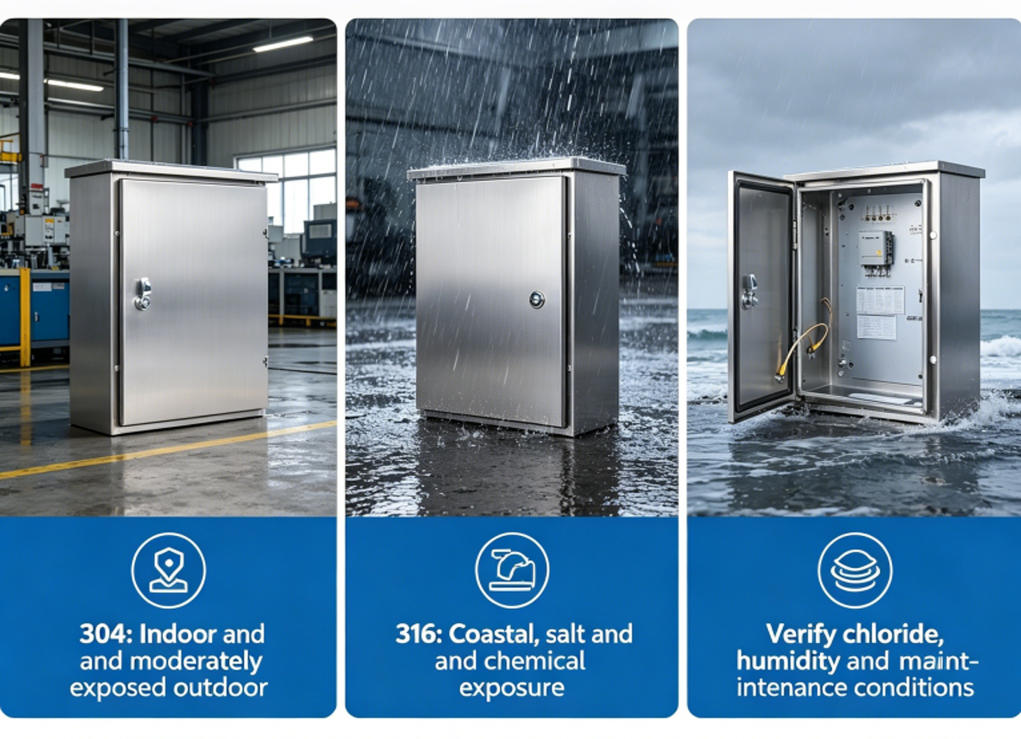
AISI 304 is suitable for many indoor, industrial and moderately exposed outdoor installations where chloride exposure is limited.
AISI 316 is generally preferred for more corrosive environments, such as:
- Coastal and marine locations
- Areas exposed to de-icing salts
- Chemical processing sites
- Wastewater facilities
- Chloride-containing washdown environments
Material selection should consider chloride deposition, humidity, chemicals, surface finish and maintenance rather than using “indoor” or “outdoor” as the only criterion. Chlorides from sea spray, road salts and industrial exposure are major contributors to atmospheric corrosion of stainless steel.
Check Testing Documents and Compliance Files
Request documents that match the actual model, dimensions, material and configuration being supplied.
Depending on the project, these may include:
- Product datasheet and drawing
- Material declaration
- IP and IK test reports
- EN IEC 62208 documentation
- Corrosion-test information
- Installation instructions
- EU Declaration of Conformity, where applicable
Custom holes, accessories or structural changes should be reviewed before production because they may affect the validity of existing test results.
Saipwell Stainless Steel Enclosures for European Projects
Saipwell provides stainless steel wall-mounted enclosures for industrial control, outdoor equipment and customised electrical projects.
Available options include:
- Standard SUS304 construction
- Optional SUS316 or other materials
- IP66 enclosure structures
- Custom height, width and depth
- Custom cable entries
- Custom mounting plates and internal layouts
- Reinforcement for large enclosure sizes
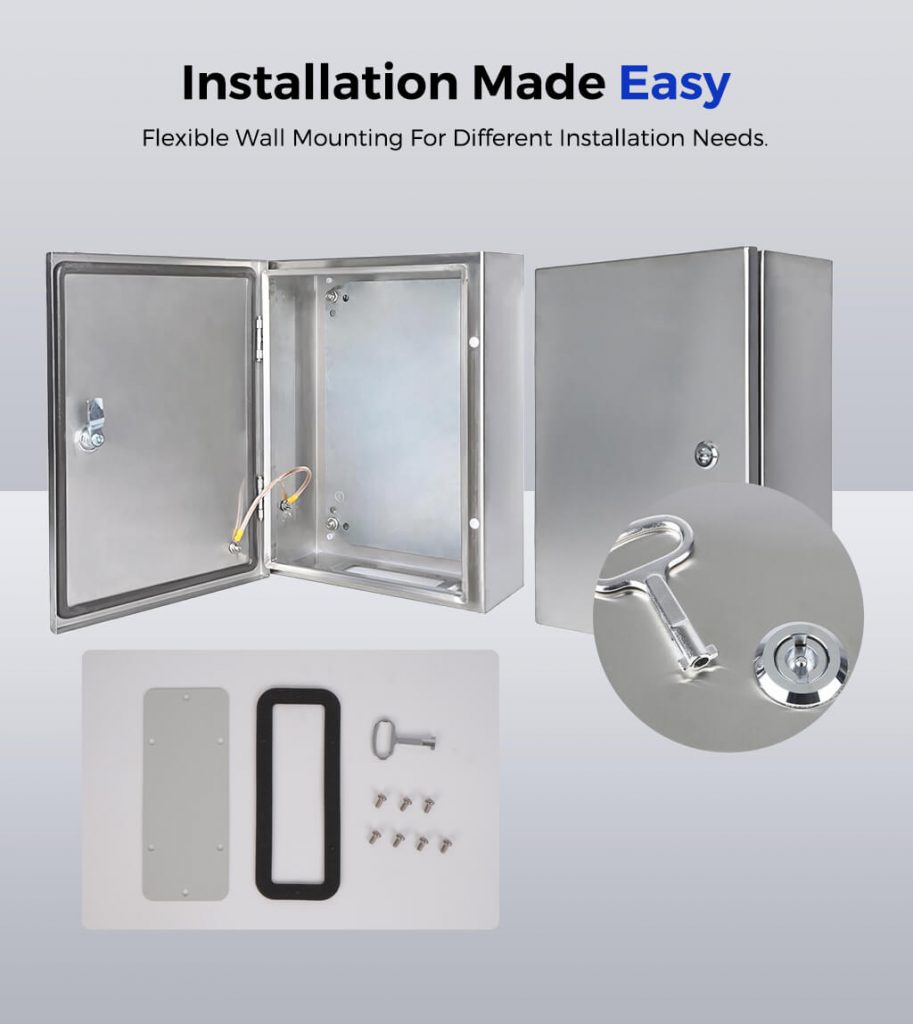
The standard SPB model uses SUS304 with a brushed surface, while material, size, mounting plate and cutout arrangements can be adjusted according to project requirements.
Certificates and test reports should always be confirmed by model, order requirement and certification scope. Saipwell can also support project-specific certification customisation and documentation review where required.
Conclusion
European stainless steel enclosure specifications usually involve several separate standards.
EN IEC 62208 covers the empty enclosure, IEC 60529 defines IP ingress protection, and IEC 62262 defines IK impact resistance. IEC 61439 becomes relevant when the enclosure is built into a complete low-voltage assembly.
IP, IK, material grade and CE compliance should therefore be specified separately. A reliable project specification should define the application environment, stainless steel grade, required protection ratings, final assembly responsibility and supporting documentation before production.
FAQ
Is EN IEC 62208 required for stainless steel enclosures?
EN IEC 62208 is the main European standard used for empty enclosures intended for low-voltage switchgear and controlgear assemblies. Whether it is mandatory depends on the applicable product requirements, contract and project specification.
What is the difference between IP65 and IP66 stainless steel enclosures?
Both are dust-tight. IP65 protects against water jets, while IP66 protects against more powerful water jets under IEC 60529 test conditions.
Does an IP66 rating mean CE certified?
No. IP66 is an ingress-protection rating. CE compliance requires assessment against all applicable EU legal requirements and preparation of the required technical documentation.
Is IEC 61439 required for an empty enclosure?
IEC 61439 generally applies to completed low-voltage switchgear and controlgear assemblies. EN IEC 62208 is the relevant standard for the empty enclosure before electrical components are installed.
What stainless steel grade is best for outdoor European applications?
AISI 304 is suitable for many general outdoor locations with limited chloride exposure. AISI 316 is normally preferred for coastal, marine, chemical or high-chloride environments.