

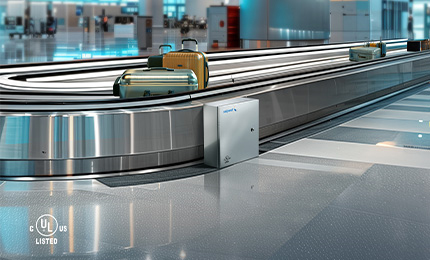


Prevent condensation in Southeast Asian outdoor electrical enclosures by limiting moisture entry, controlling dew point and managing pressure changes.
High humidity, monsoon rainfall, daytime heating and night-time cooling can create water droplets inside an enclosure. This may happen even in an IP66 enclosure because the rating controls external ingress, not the moisture already trapped inside.
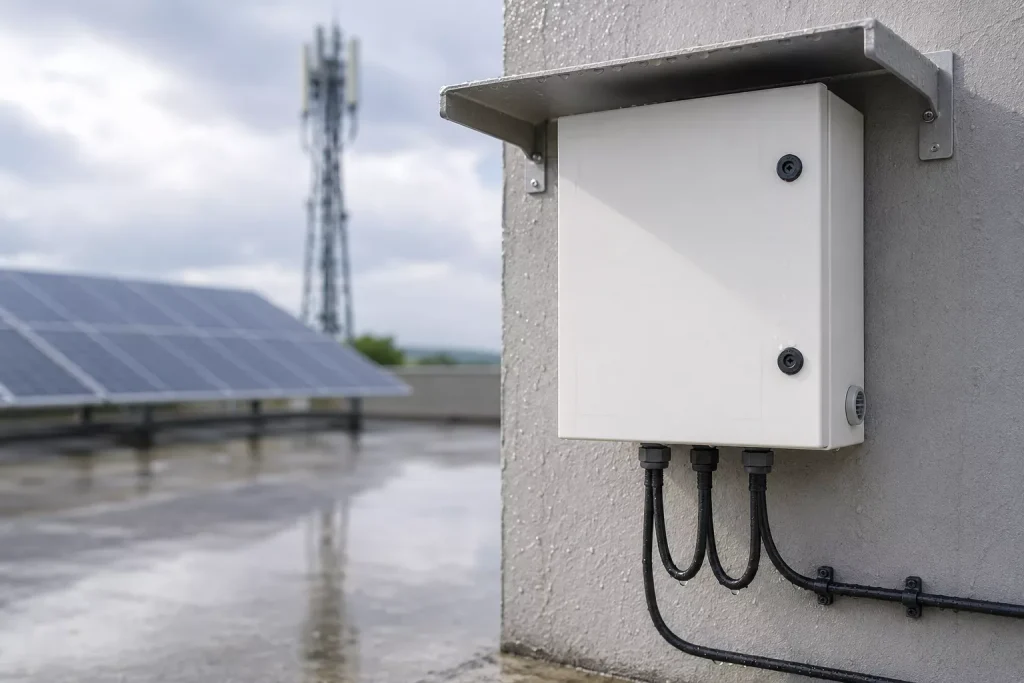
Key Takeaways
- IP66 does not automatically prevent internal condensation.
- Condensation forms when a surface falls below the air’s dew point.
- Sealing, installation position and humidity control should work together.
- Vents, drains and heaters must match the enclosure and site conditions.
Why Is Condensation a Serious Risk in Southeast Asian Outdoor Enclosures?
High Humidity and Monsoon Rainfall
Malaysia’s climate is officially described as having high humidity and abundant rainfall. In the Philippines, average monthly relative humidity ranges from about 71% to 85%. These conditions illustrate the moisture exposure common to many Southeast Asian outdoor projects. Malaysia climate information; Philippines climate information.
High humidity raises the dew point inside an enclosure, so only a moderate temperature drop may be needed for condensation to begin. Monsoon rain also increases the risk of water entering through weak cable glands, damaged gaskets or unused openings.
Solar Heating and Night-Time Cooling
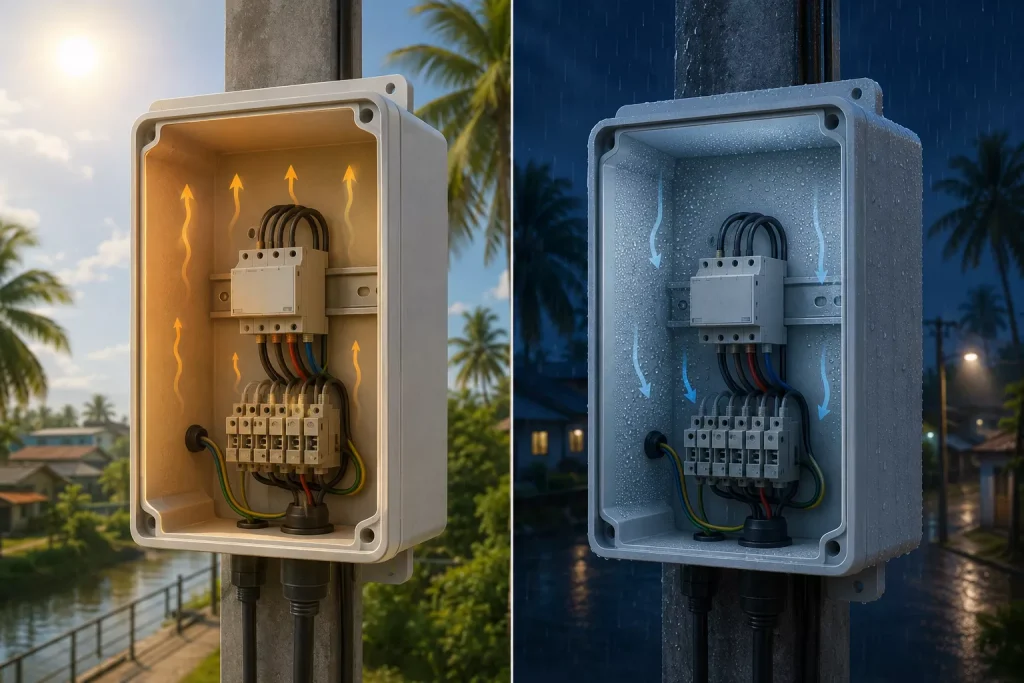
Direct sunlight heats the enclosure and the air inside it during the day. After sunset, or when rain rapidly cools the enclosure, internal surfaces may fall below the dew point. Moisture in the air then becomes liquid water.
Repeated day-and-night temperature cycles can therefore create condensation without a visible leak.
Coastal Air and Frequent Maintenance Access
Salt air does not directly cause condensation, but it can accelerate moisture-related corrosion on terminals, locks, mounting plates and connections.
Opening an enclosure for maintenance also introduces humid outside air. If the enclosure is closed and later cools, this moisture may condense.
| Regional Condition | Enclosure Effect | Typical Risk |
| High humidity | Raises the internal dew point | Condensation on terminals and PCBs |
| Monsoon rainfall | Increases moisture exposure | Ingress through weak entries |
| Strong solar load | Creates temperature cycles | Day-and-night condensation |
| Coastal salt air | Accelerates corrosion | Hardware and connection damage |
Why Can Condensation Form Inside an IP66 Enclosure?
IP Rating Controls Ingress, Not Internal Humidity
An IP rating evaluates protection against solids and water under defined test conditions. IP66 protects against dust and powerful water jets, but it does not confirm that the internal air is dry. The IEC IP rating overview explains that IP classifications focus on external ingress.
Humid air may be sealed inside during installation or introduced when the door is opened. Raising the IP rating alone does not remove that moisture.
Dew Point and Thermal Breathing
Condensation forms when humid air contacts a surface below its dew point. Higher relative humidity means condensation can begin after a smaller temperature drop. Pfannenberg’s technical guidance identifies the same dew-point mechanism.
Temperature changes also cause thermal breathing. Internal air expands during daytime heating and contracts during night-time cooling. These pressure changes can move small amounts of humid air through seals, cable interfaces and other openings.
Is It Condensation or Water Ingress?
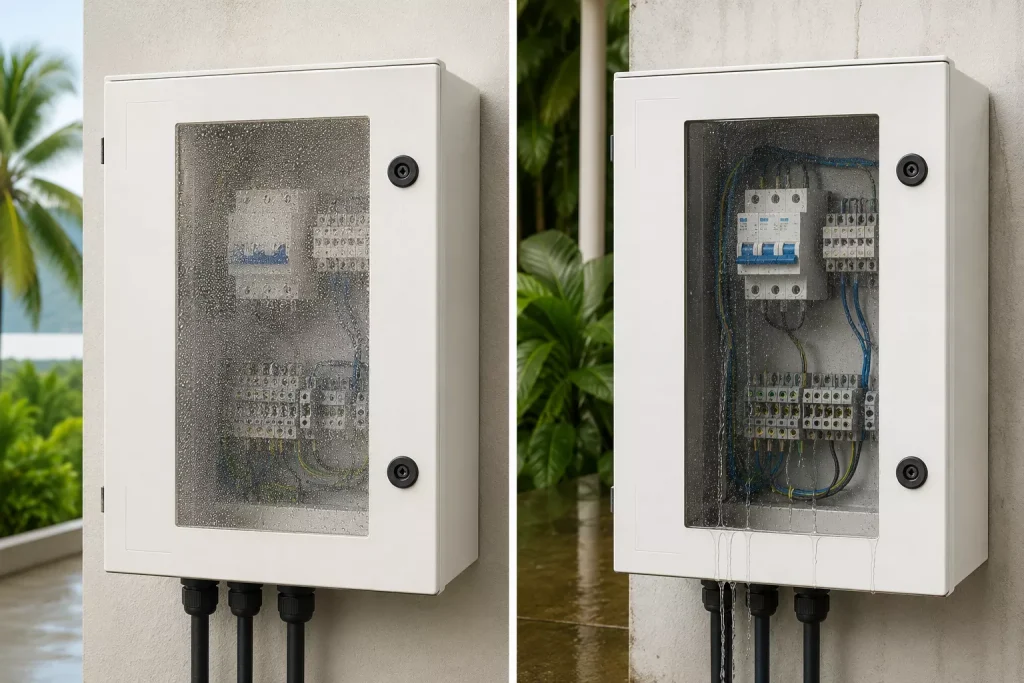
The source should be identified before changing the enclosure or adding humidity-control equipment.
| Sign | More Likely Condensation | More Likely Water Ingress |
| Moisture appears after cool nights | Yes | Possible |
| Fine droplets cover several surfaces | Yes | Less likely |
| Water begins near a gland or door seal | Less likely | Yes |
| Moisture appears without rainfall | Yes | Less likely |
| Standing water follows a storm | Possible | Yes |
| Corrosion repeats without a visible leak | Yes | Possible |
A concentrated water trail normally indicates a leak. Fine droplets across several internal surfaces are more consistent with condensation.
Repair faulty glands, openings or gaskets first. If moisture mainly appears after temperature changes, adding more sealant may simply trap humid air inside.
How to Prevent Condensation in Southeast Asian Outdoor Enclosures
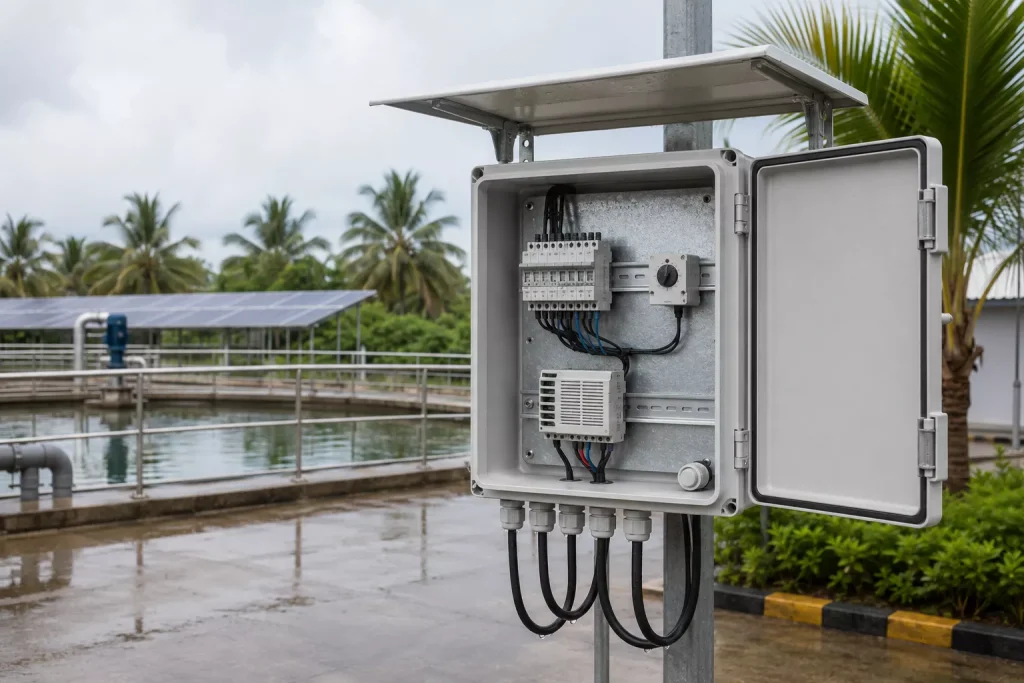
Reduce Moisture Entry During Installation
Close the enclosure under the driest practical conditions. Match each IP-rated cable gland to the cable diameter and seal every unused opening.
Where the design permits:
- Position cable entries on the bottom or lower side.
- Form drip loops below the enclosure.
- Check door alignment and gasket compression.
- Replace damaged or permanently deformed seals.
Reduce Temperature Swings and Cold Surfaces
Avoid direct afternoon sunlight when possible. A separate sun shield or rain canopy can reduce solar heating and sudden cooling caused by rainfall.
Leave sufficient internal space for air movement and avoid placing concentrated heat sources directly against the enclosure wall. Non-metallic enclosures transfer heat more slowly than metal, but material choice alone cannot eliminate trapped moisture.
Equalize Pressure Without Sacrificing Protection
An IP-rated membrane vent allows pressure and water vapor exchange while restricting liquid water and solid contaminants. This reduces stress on seals and can lower condensation risk. GORE’s enclosure vent guidance describes pressure equalization and condensation reduction as key vent functions.
Select the vent according to the required IP rating, enclosure volume, temperature changes and exposure to UV, salt or chemicals. A normal open ventilation hole should not be used as a substitute.
A breather drain may also help release pressure and remove collected water when installed at a true low point.
Control Temperature and Humidity When Passive Measures Are Not Enough
A hygrostat-controlled enclosure heater keeps internal surfaces above the dew point. In tropical climates, its purpose is condensation control rather than protection from cold weather.
Larger or high-value enclosures may require:
- A compact dehumidifier
- Closed-loop enclosure cooling
- Internal humidity sensors
- Remote temperature and humidity alarms
Desiccant packs can support small, serviceable boxes, but they have limited capacity and require replacement.
Which Condensation-Control Method Fits Your Application?
The correct method depends on enclosure volume, internal heat load, ambient humidity, available power and maintenance frequency.
| Application Condition | Recommended Approach |
| Small shaded junction box | Correct sealing and replaceable desiccant |
| Solar or telecom enclosure | Sun shield and IP-rated pressure vent |
| Coastal installation | Corrosion-resistant enclosure and rated vent or drain |
| Large control enclosure | Hygrostat, heater or closed-loop cooling |
| Remote unattended site | Pressure vent and humidity monitoring |
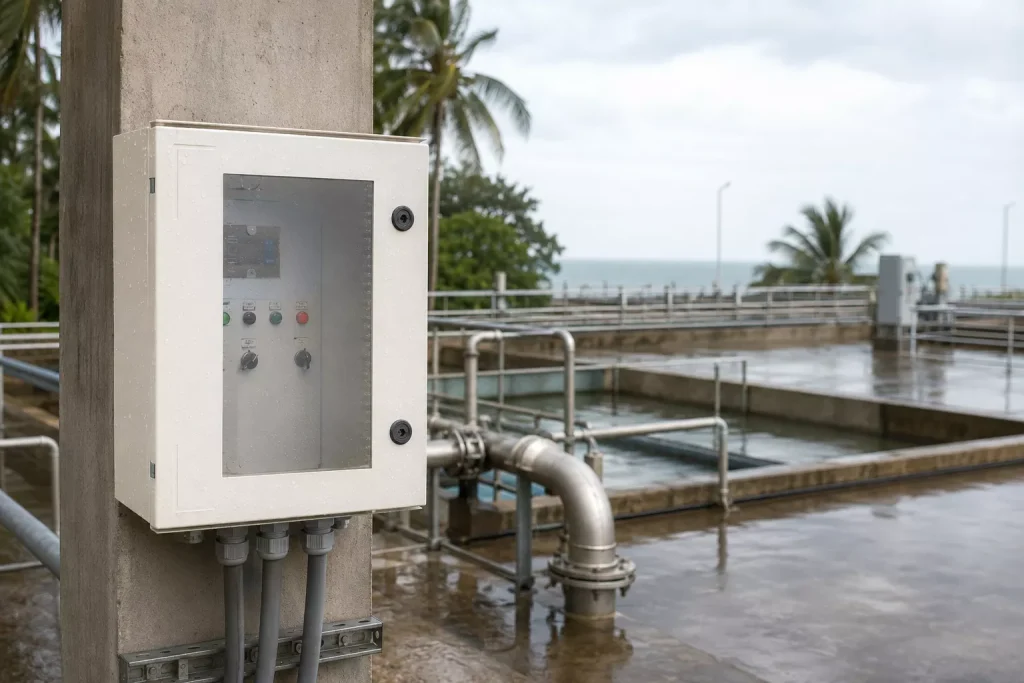
| Wastewater or chemical site | Fiberglass enclosure and compatible seals |
Passive measures may be enough for a small junction box, while remote or high-value equipment usually needs monitoring or active humidity control.
How Do Fiberglass Enclosures Help in Humid Tropical Environments?
Fiberglass enclosures provide several advantages in humid and corrosive locations:
- The fiberglass shell does not rust like ordinary carbon steel.
- Lower heat transfer than metal can reduce rapid wall-temperature changes.
- The non-conductive shell suits many control, telecom, solar and water-treatment applications.
- IP66 construction helps restrict external rainwater and dust.
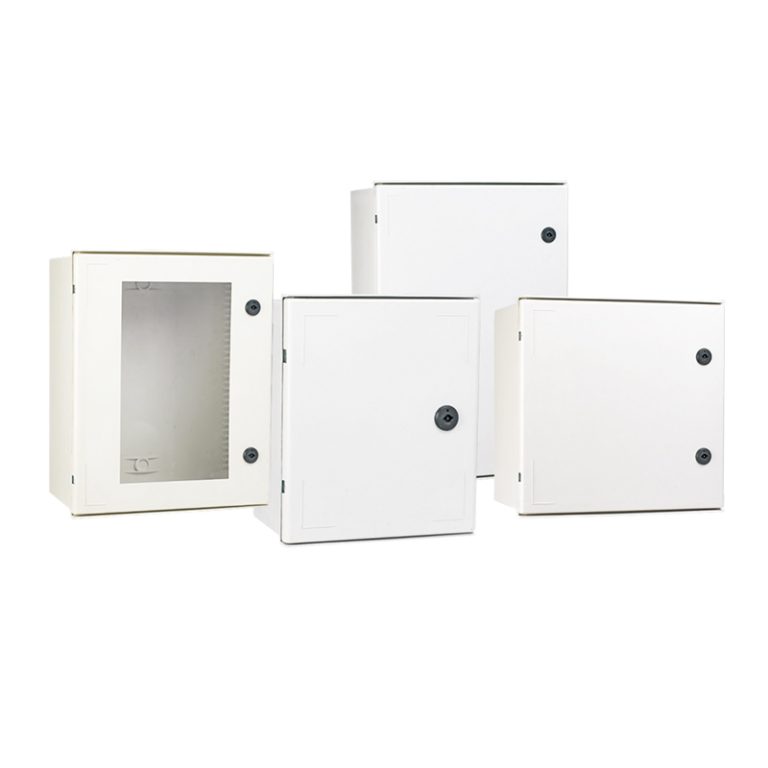
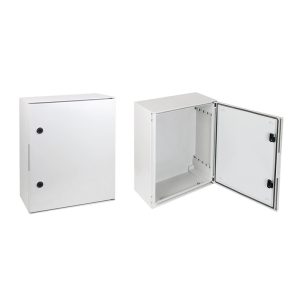
Saipwell’s IP66 fiberglass electrical enclosure uses an SMC fiberglass body and cover with a PU waterproof ring. The product page lists IP66, NEMA 4X and IK09 ratings.
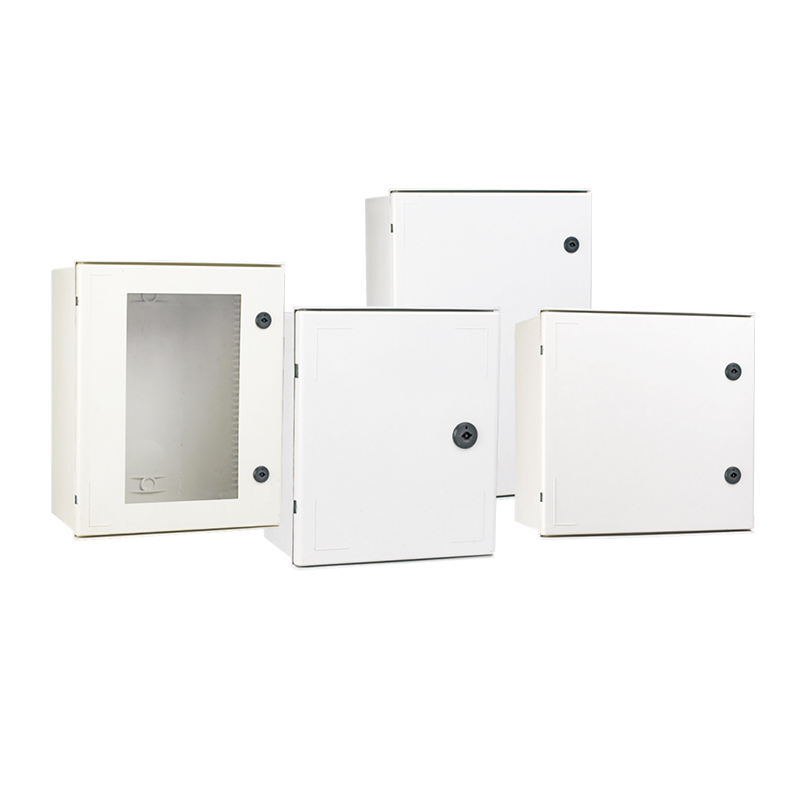
However, fiberglass cannot remove humid air already inside the enclosure. Correct cable entries, pressure management and humidity control are still required.
Condensation Prevention Checklist Before Commissioning
- Confirm ambient temperature and relative humidity.
- Estimate the internal equipment heat load.
- Check exposure to direct sunlight and rainfall.
- Confirm the enclosure material and IP requirement.
- Verify door alignment and gasket compression.
- Match cable glands to cable diameters.
- Seal every unused opening.
- Add drip loops where required.
- Decide whether a vent, drain or heater is needed.
- Confirm that accessories maintain the required IP rating.
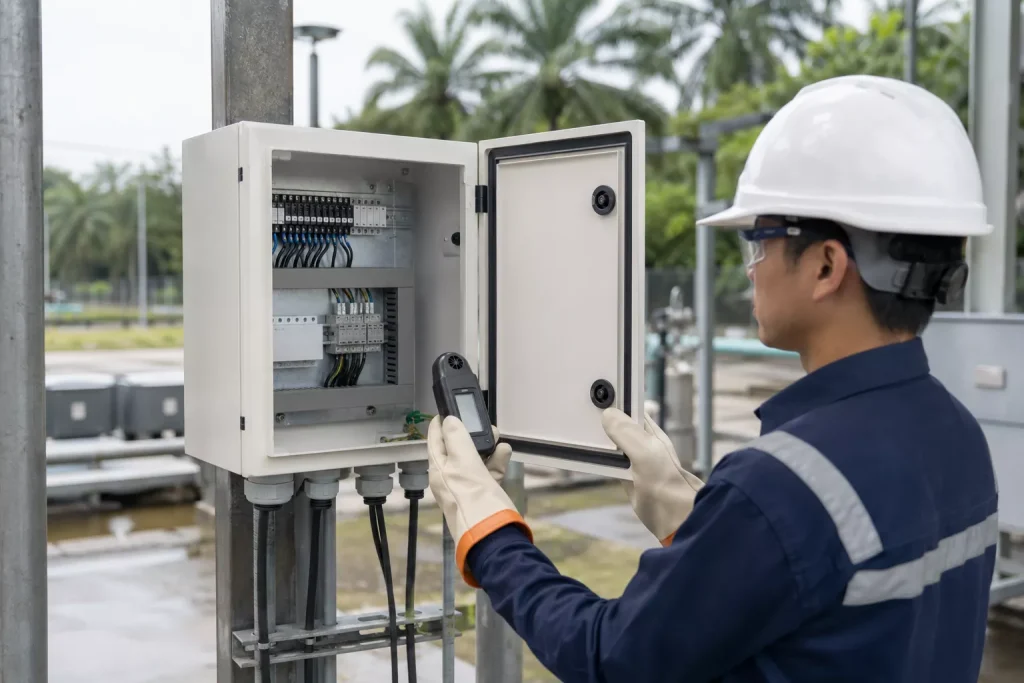
- Record internal temperature and humidity after commissioning.
Conclusion
Southeast Asian outdoor enclosures require protection against both external water ingress and internal condensation.
IP66 is an important barrier, but it cannot replace dew-point, pressure and humidity control. The final solution should combine the correct enclosure material, installation method and climate-control accessories.
Saipwell provides IP66 fiberglass enclosures and enclosure climate-control components for humid, rainy and corrosive outdoor projects.
FAQs About Condensation in Southeast Asian Electrical Enclosures
Can condensation occur inside an IP66 electrical enclosure?
Yes. IP66 restricts external water and dust but does not remove humid air trapped inside or prevent surfaces from reaching the dew point.
Should an outdoor electrical enclosure be completely airtight?
Not always. A fully sealed enclosure may trap moisture and develop pressure differences. Use a rated pressure vent when controlled air exchange is required.
Do electrical enclosures need heaters in tropical climates?
Some do. A heater can keep internal surfaces above the dew point where temperature cycles repeatedly cause condensation.
Are desiccant packs enough for outdoor electrical enclosures?
They may be suitable for small, serviceable boxes. Remote or high-moisture installations usually need more stable humidity control.
Are fiberglass enclosures better than metal for humid climates?
Fiberglass offers corrosion resistance, electrical insulation and lower heat transfer. Selection must also consider strength, heat dissipation, fire performance and EMC requirements.