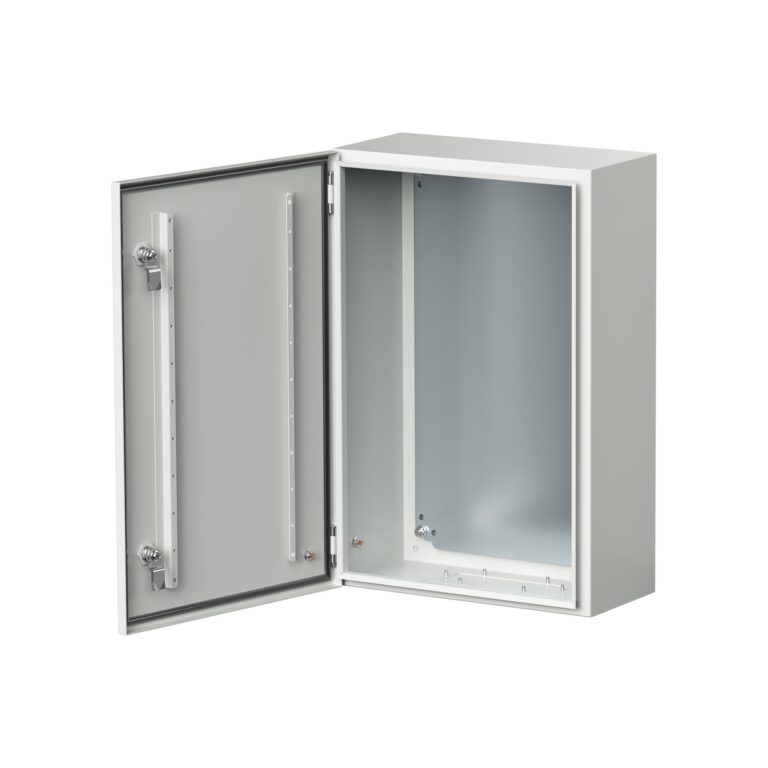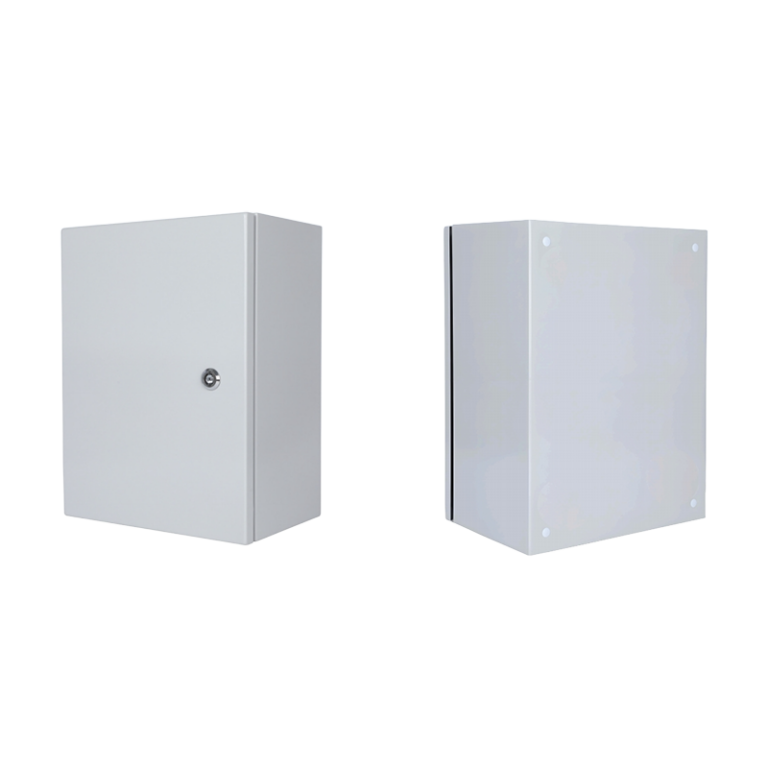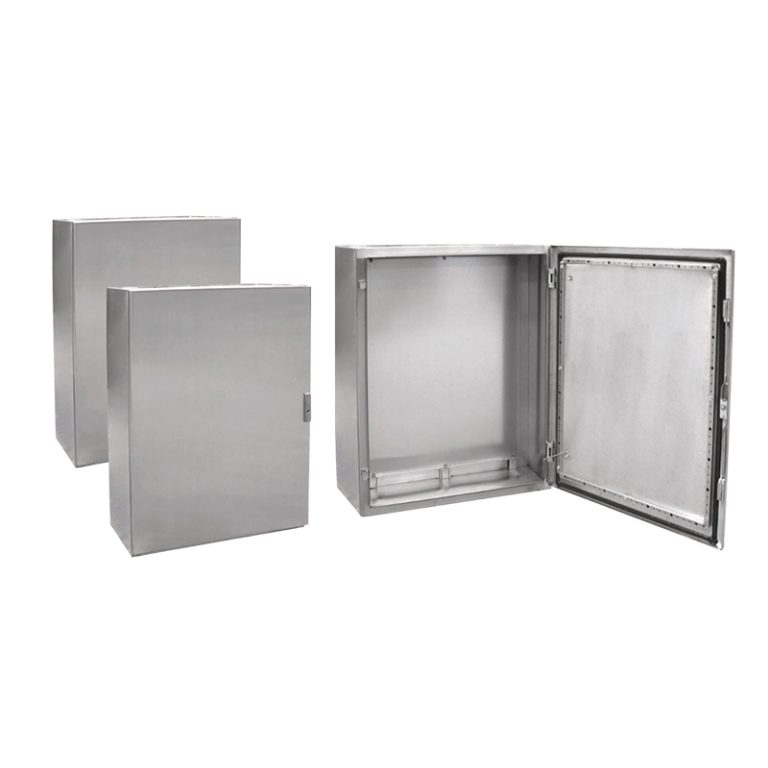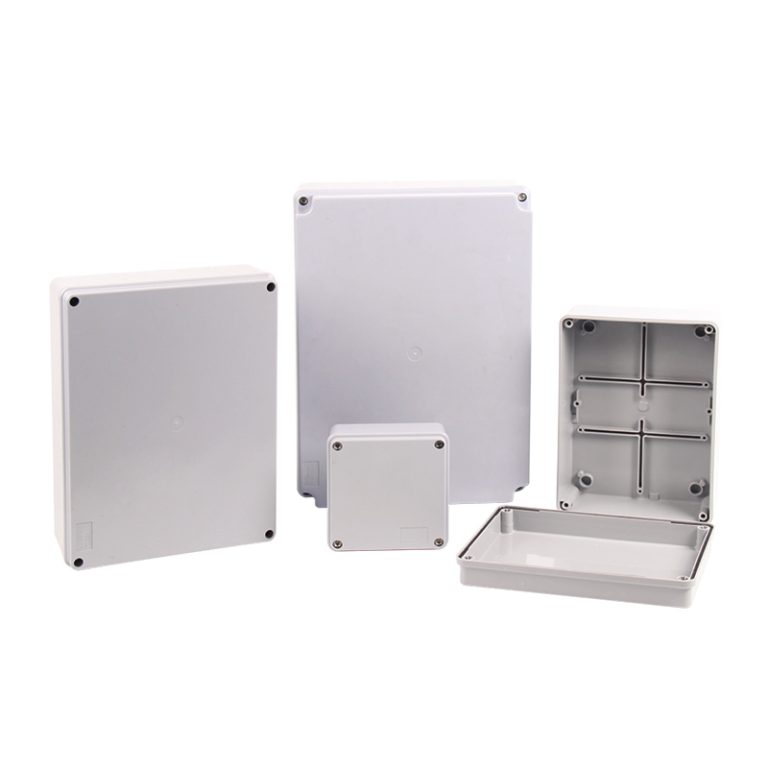

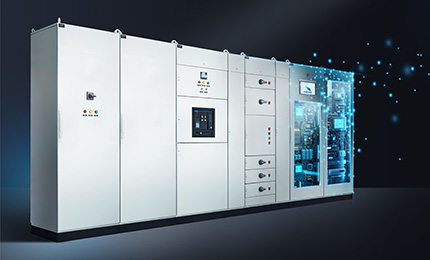

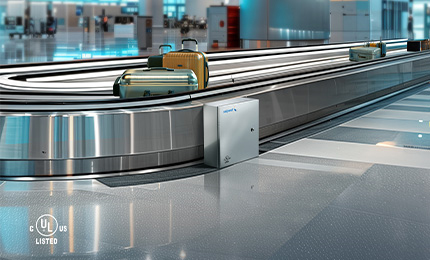


An electric control box houses and protects components that control machinery, allowing equipment to start, stop, monitor, regulate and respond safely.
Also called an electrical control box or electric controller box, it combines circuit protection, control logic, switching devices and operator interfaces inside a protective electrical enclosure. Depending on its design, a control box may operate a motor, pump, HVAC unit, production line, lighting system or outdoor installation.
This guide explains how electrical control boxes work, what components they contain, how common types differ and what to consider when selecting an enclosure.
Key Takeaways
- A control box receives commands or sensor signals, processes them and controls connected equipment.
- Common internal components include circuit breakers, relays, contactors, PLCs, power supplies, terminal blocks, switches and HMIs.
- Control boxes can be classified by function, mounting method and environmental protection.
- Enclosure size, material, cable entry, heat management and IP or NEMA protection should match the actual application.
- A custom enclosure may be required when standard dimensions, cutouts or internal layouts cannot support the project.
What Is an Electric Control Box?
An electric control box is a centralized unit used to control, monitor and protect electrical equipment. It provides an organized location for electrical and electronic components and may also give operators a practical interface for starting, stopping, adjusting or monitoring machinery.

A simple control box may contain a disconnect switch, fuse, relay and indicator light. A more advanced industrial control box may include contactors, a PLC, power supplies, communication modules, an HMI, sensors and fault-monitoring devices.
The term “control box” is not applied in exactly the same way by every supplier. It may refer to:
- A complete wired and tested control assembly
- An enclosure fitted with mounting hardware and cutouts
- An empty enclosure prepared for control components
Project documents and quotations should therefore clarify whether the supplied scope includes the enclosure, internal components, wiring, programming, testing and technical documentation.
A control box also differs from a basic distribution box. A distribution box mainly divides incoming power among circuits, while a control box uses inputs, logic and switching devices to change how connected equipment operates.
How Does an Electrical Control Box Work?
Most electrical control boxes operate through four connected stages: input, control logic, output and feedback.
| Stage | What Happens | Example |
| Input | The control box receives a manual command or sensor signal. | A button is pressed or a pressure sensor detects a low value. |
| Control logic | A relay, timer, PLC or controller evaluates the input. | The system determines whether a pump or motor should run. |
| Output | The control box switches or commands the connected load. | A contactor starts a motor or activates an alarm. |
| Feedback | Operating or fault information returns to the controller or operator. | An indicator light or HMI displays the equipment status. |
For example, a pump control box may receive a low-pressure signal and use a relay or PLC to energize a contactor. The contactor starts the pump, and the control system stops it when the required pressure is restored.
A main control box may coordinate several local control boxes in a larger machine or production process. It can collect operating signals, manage interlocks and alarms, and send commands to motors, pumps, valves or other controlled devices.
What Is Inside an Electrical Control Box?
The exact component list depends on the electrical load, control method and required level of automation. Internal components can generally be divided into three groups.

Power and Protection Components
These components receive, isolate, convert and protect the electrical supply.
- Main disconnect or isolator
- Circuit breakers and fuses
- Power supplies and transformers
- Surge protection devices
- Power terminals and distribution blocks
- Grounding or bonding components
The selected devices must match the system voltage, load current, fault conditions and applicable safety requirements.
Control and Automation Components
These devices process signals and control the operation of connected equipment.
- Relays and timers
- Contactors
- Motor starters
- PLCs or other controllers
- Variable-frequency drives
- Communication and I/O modules
- Sensors and control modules
Not every control box requires a PLC. Simple equipment may only need relays, contactors or timers, while an automated machine may require programmable logic and communication functions.
Interface, Wiring and Mounting Components
These components connect the internal devices, organize the layout and allow operators to interact with the system.
- Terminal blocks
- Wiring ducts
- DIN rails
- Mounting plates
- Push buttons and selector switches
- Emergency-stop devices
- Indicator lights and alarms
- Meters and HMI screens
- Cable glands and entry plates
- Labels and identification markers
The enclosure must provide enough space for wiring routes, cable bending, equipment clearance, heat dissipation and maintenance access.
Common Types of Electric Control Boxes
Control boxes can be classified by their function, mounting method or environmental protection. These categories may be combined in one product. For example, a unit may be a wall-mounted stainless steel pump control box designed for outdoor use.
Types by Control Function
| Type | Typical Function |
| Motor control box | Starts, stops and protects a motor using contactors, overload protection or a drive. |
| Pump control box | Controls pumps according to pressure, level, flow or manual commands. |
| PLC control box | Uses programmable logic to automate machinery, production lines or process equipment. |
| HVAC control box | Controls fans, compressors, dampers, heating elements and environmental sensors. |
| Lighting control box | Manages scheduled, sensor-based or manually controlled lighting circuits. |
| Main control box | Coordinates the main functions, interlocks and alarms of a machine or system. |
Projects that require more component space, expanded I/O and larger wiring areas may need a PLC electrical control cabinet rather than a compact local control box.
Types by Mounting Method
- Wall-mounted control boxes save floor space and are commonly used for local machine control, pumps, HVAC equipment and outdoor installations.
- Floor-standing control cabinets provide more room for large component layouts, multiple mounting areas and extensive field wiring.
- Machine-mounted control boxes are installed directly on or close to the controlled equipment.
- Pole-mounted control boxes are used for outdoor lighting, telecommunications, monitoring and remote equipment.

For compact and medium-sized installations, a wall mount electrical cabinet can provide a practical enclosure format while keeping components accessible for inspection.
Types by Environmental Protection
A standard indoor control box may be suitable for clean and dry locations. Outdoor, wet or dusty environments require stronger sealing and an appropriate enclosure rating.
Corrosive, coastal, food-processing or washdown environments may require stainless steel or other corrosion-resistant materials. Applications with unusual dimensions, cutouts or mounting requirements may need a custom control box enclosure.
Common Applications of Electric Control Boxes
Electric control boxes are used wherever equipment requires centralized switching, automation, monitoring or protection.
| Application | Typical Control Requirement |
| Industrial machinery | Controls conveyors, packaging equipment, machine tools and automated production stations. |
| Motor and pump systems | Manages starting, stopping, overload protection, pressure, level and flow. |
| HVAC and building services | Regulates fans, compressors, dampers, pumps, temperature and humidity. |
| Water treatment | Controls pumps, valves, filtration equipment, alarms and process sensors. |
| Lighting and energy systems | Provides scheduled, sensor-based or remotely managed control. |
| Outdoor infrastructure | Protects and controls telecommunications, transport, security and field equipment. |
| Renewable energy | Supports monitoring, switching and protection for solar, storage and related equipment. |
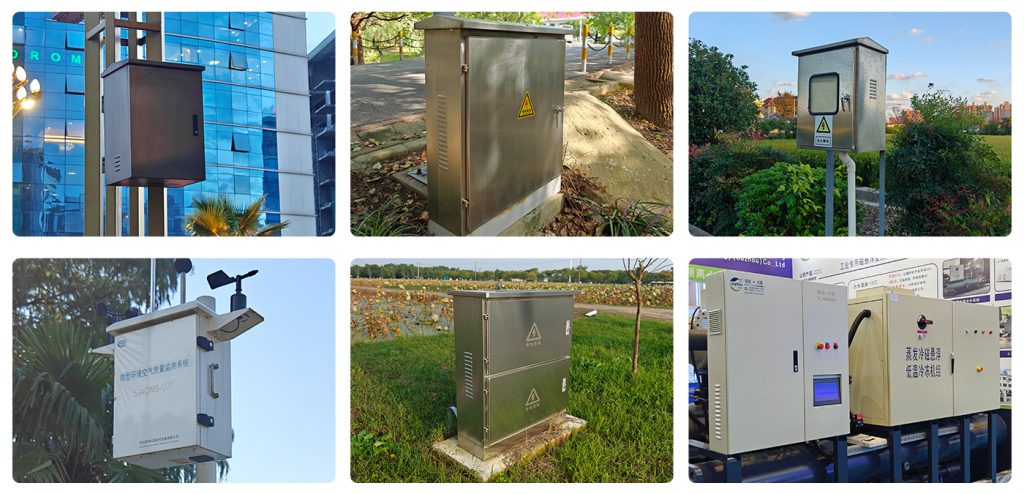
The application determines the required electrical devices, but it also affects enclosure size, material, cable entry, mounting and environmental protection.
Control Box vs Control Panel vs Cabinet vs Junction Box
These terms may overlap between suppliers and industries. The most useful distinction is the primary function and the scope included in the supplied product.
| Product | Primary Purpose | Typical Contents or Features |
| Control box | Controls and monitors specific equipment or a local function. | Switches, relays, contactors, terminals, controllers and interface devices. |
| Control panel | Controls a larger or more complex machine or process. | PLCs, HMIs, drives, meters, control devices and communication modules. |
| Control cabinet | Provides cabinet-scale space for industrial control equipment. | Larger mounting areas, more wiring capacity and improved maintenance access. |
| Junction box | Connects and protects wire joints or cable branches. | Terminals, connectors and cable glands, usually with little or no control logic. |
| Distribution box | Distributes electrical power among multiple circuits. | Circuit breakers, fuses, busbars and distribution devices. |
A compact equipment-level unit is often described as a control box, while a larger assembly may be called a control panel or control cabinet. Because the terminology is not universal, buyers should confirm dimensions, components, wiring scope, testing and certification instead of relying only on the product name.
How to Choose the Right Electric Control Box
Control box selection should begin with the controlled equipment, internal layout and installation environment. Choosing only by external dimensions can result in difficult wiring, excessive temperature, poor sealing or limited maintenance access.
1. Define the Control Function and Electrical Scope
Confirm what the box must control and document:
- Supply and control voltages
- Load current and equipment type
- Required inputs and outputs
- Operating modes
- Fault and emergency responses
- Communication requirements
- Operator interfaces
- Required protection devices
Also clarify whether the project requires an empty enclosure, a modified enclosure or a complete control assembly.
2. Size the Internal Layout
Arrange the mounting plate, DIN rails, wiring ducts, terminal blocks, power devices, control devices and door-mounted components before finalizing the enclosure dimensions.
Allow practical reserve space for:
- Cable bending and termination
- Separation of power and signal wiring
- Equipment clearance
- Air circulation
- Inspection and maintenance
- Future modifications
The smallest box that can physically hold the components is not necessarily the most suitable enclosure.
3. Choose the Enclosure Material
Material selection should reflect the environment, component weight, corrosion risk and mechanical requirements.
- Painted sheet steel is strong and economical for many indoor industrial applications.
- Stainless steel provides better resistance to corrosion, washdown and long-term outdoor exposure.
- Polycarbonate, ABS and fiberglass offer non-metallic, lightweight and corrosion-resistant options.
- Aluminum combines relatively low weight with useful corrosion resistance and heat dissipation.
For demanding outdoor, coastal or washdown projects, review available stainless steel electrical enclosures before confirming the material.
4. Select the Required IP or NEMA Rating
The required protection level depends on exposure to dust, rain, water jets, washdown, corrosion, oil, ice or temporary immersion.
IP ratings classify protection against solid objects and water. NEMA enclosure types consider environmental conditions under a different test system and may include factors not covered by the IP code. They should not be treated as exact one-to-one equivalents.
The guide to NEMA and IP ratings for metal enclosures provides additional guidance for comparing protection levels and installation conditions.
An enclosure rating applies to the complete sealing system. Incorrect cable glands, poorly prepared cutouts, unsealed openings, damaged gaskets or unsuitable ventilation components can reduce the protection of the finished installation.
5. Plan Cable Entry and Thermal Management
Confirm cable quantity, diameter, entry direction and the required gland, conduit or connector types. Provide enough space for termination without excessive cable bending or crowded wiring.
Heat generated by power supplies, contactors, drives and electronic devices must also be evaluated. Depending on the ambient temperature and heat load, the control box may need:
- Passive spacing
- Vents or filtered ventilation
- Fan filters
- Heat exchangers
- Cabinet air conditioning
- Enclosure heaters or condensation control
Thermal accessories should be selected without compromising the required enclosure protection.
6. Check Safety, Maintenance and Compliance
The final design should provide grounding or bonding where required, protected live parts, clear labels, accessible isolation and adequate working space.
Applicable electrical codes, product standards and certification requirements depend on the country, equipment and installation. These requirements should be confirmed before the enclosure and internal layout are approved.
When Do You Need a Custom Control Box Enclosure?
A custom control box enclosure is useful when a standard size or configuration cannot support the component layout, mounting method or environmental requirement.
Common customization requirements include:
- Non-standard enclosure dimensions
- Door or panel cutouts for HMIs, switches and indicators
- Prepared holes, gland plates or conduit entries
- Custom mounting plates, DIN rails and brackets
- Internal or external mounting arrangements
- Rain protection or corrosion-resistant construction
- Ventilation and cooling preparation
- Custom locks, hinges, labels, colors or surface treatments
Before requesting a quotation, prepare the enclosure dimensions, component layout, material, installation environment, mounting method, cable entry plan, required protection level and project quantity.
Saipwell Electrical Enclosures for Control Box Applications
Saipwell provides wall-mounted, floor-standing, sheet steel, stainless steel and other electrical enclosure formats for industrial control box applications. Available solutions can support different component layouts, mounting methods, cable-entry requirements and indoor or outdoor environments.
For wall-mounted industrial control applications requiring a sealed metal enclosure, review the SPT IP65 Metal Wall Mounting Control Panel Enclosure. The enclosure includes a mounting plate, sealing structure and cable-entry preparation suitable for further project configuration.
Before selection, prepare the component layout, required dimensions, installation environment, cable-entry plan and protection level. For enclosure recommendations, customization or a project quotation, contact Saipwell.
FAQs About Electric Control Boxes
What is a control box?
A control box is an enclosure or enclosed assembly that houses components used to control, monitor and protect electrical equipment.
What does an electric control box do?
It receives manual commands or sensor signals and uses relays, contactors, PLCs or other controllers to operate connected equipment.
What is inside an electrical control box?
It may contain circuit breakers, fuses, relays, contactors, power supplies, PLCs, terminal blocks, switches, indicators, sensors and HMIs.
What is the difference between a control box and a control panel?
A control box usually refers to a compact local-control unit, while a control panel often contains more components and manages a larger machine or process.
Is a control box the same as a breaker box?
No. A breaker box primarily distributes power and protects circuits, while a control box operates or monitors equipment through switching and control logic.
Can an electric control box be installed outdoors?
Yes, provided its material, enclosure rating, cable entries, sealing, temperature control and installation method suit the outdoor environment.
What IP rating should an outdoor control box have?
There is no single rating for every outdoor installation. The correct IP rating depends on actual exposure to dust, rain, water jets, washdown or immersion.
What size control box do I need?
The enclosure must fit all components, wiring ducts, cable bends, door devices and thermal accessories while allowing safe maintenance and reasonable reserve space.
Article last updated: July 29, 2026